Mongolia Dzud 2026: Is the Country Ready for Another Iron Dzud?
NEMA warns this winter could be 5°C colder than past dzud years, with 88% of soums at risk. Is Mongolia prepared?

Khulan M.
November 23, 2026
November 23, 2026
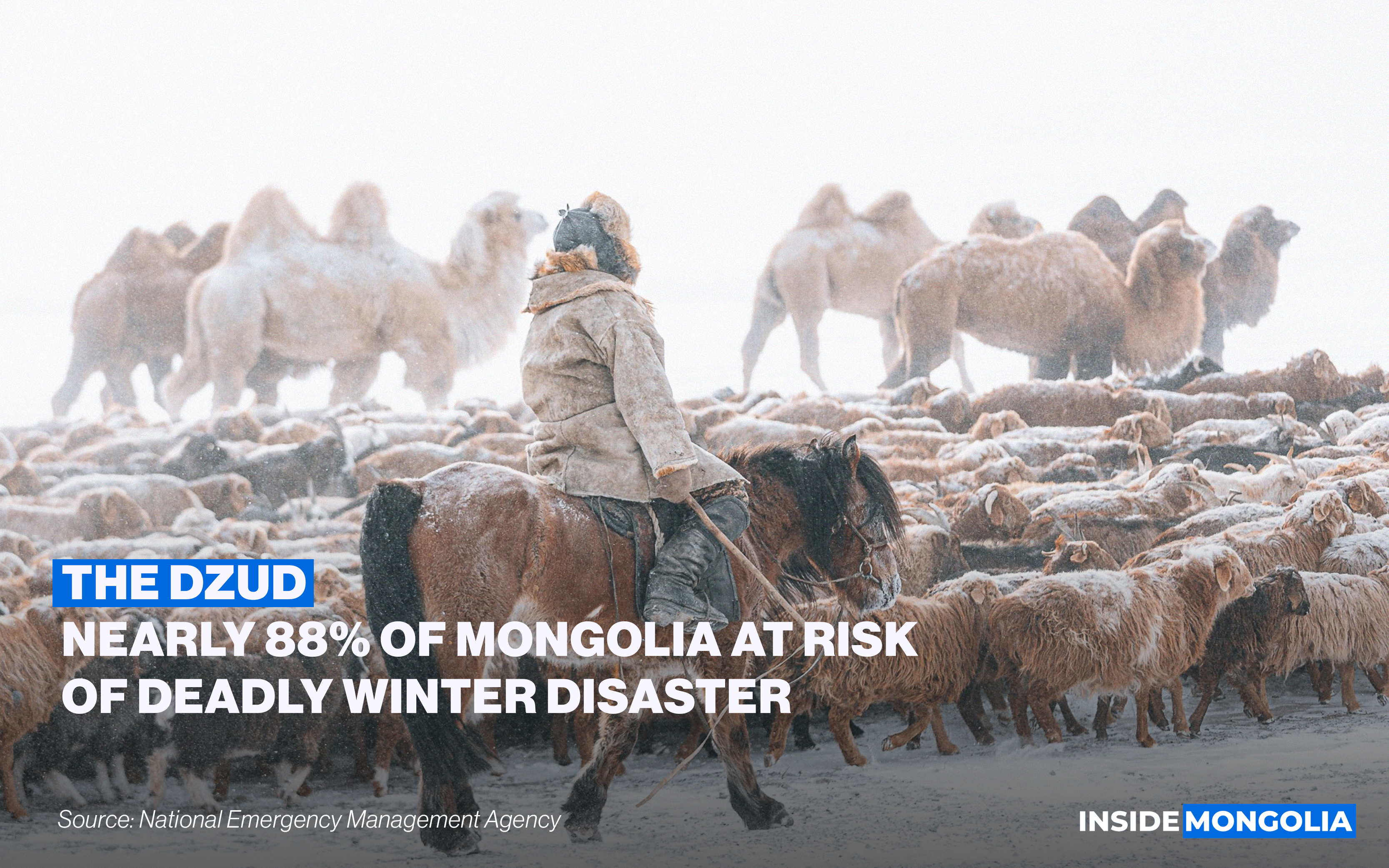
The iron dzud of winter 2023 to 2024 killed roughly 8 million livestock in Mongolia and caused an estimated $1.5 billion to $1.9 billion in damage. This winter, the same conditions are returning.
⚠️ The Warning
The National Emergency Management Agency has warned that this winter could be up to 5°C colder than past dzud years, with December to February the hardest stretch for western and central Mongolia.
🌾 A dry summer left pastures in Khovd, Zavkhan, Gobi Altai, Bayankhongor and Umnugobi only 20% to 30% usable, so herds are entering winter underfed.
📍 NEMA estimates that 290 of Mongolia’s 330 soums, or 87.8%, face moderate to very high dzud risk.
🔴 NEMA rates eight soums as very high risk, seven of them in Bayan Ulgii.
🔁 Once a Decade, Now Routine
Dzuds used to strike about once a decade. Mongolia has endured six in the past ten years. The 2022 to 2023 winter killed 4.4 million animals, and the iron dzud that followed was the deadliest since 2009 to 2010, when about 10.3 million livestock perished. The national herd shrank from 64.7 million at the end of 2023 to 58.1 million at the end of 2025. Meteorologists now expect nationwide dzuds every four to five years.
🏛️ Is the State Ready?
Each autumn, the government orders provinces to stock hay and fodder and sends discounted fodder to high risk areas, an approach the UN praised in 2024. 💰 The government has doubled subsidized lending to herders to ₮1 trillion.
Yet losses remain heavy. A UNDP assessment found the 2024 response well coordinated, but the death toll stayed high. A 2026 UNDP proposal highlights gaps in turning early warnings into local action, and many herders still lack fodder. Mongolia can forecast a dzud weeks ahead. The question is whether warnings reach herders in time to prepare.
Comment