The Rise of the National League
Khulan M.
March 2, 2026
March 2, 2026
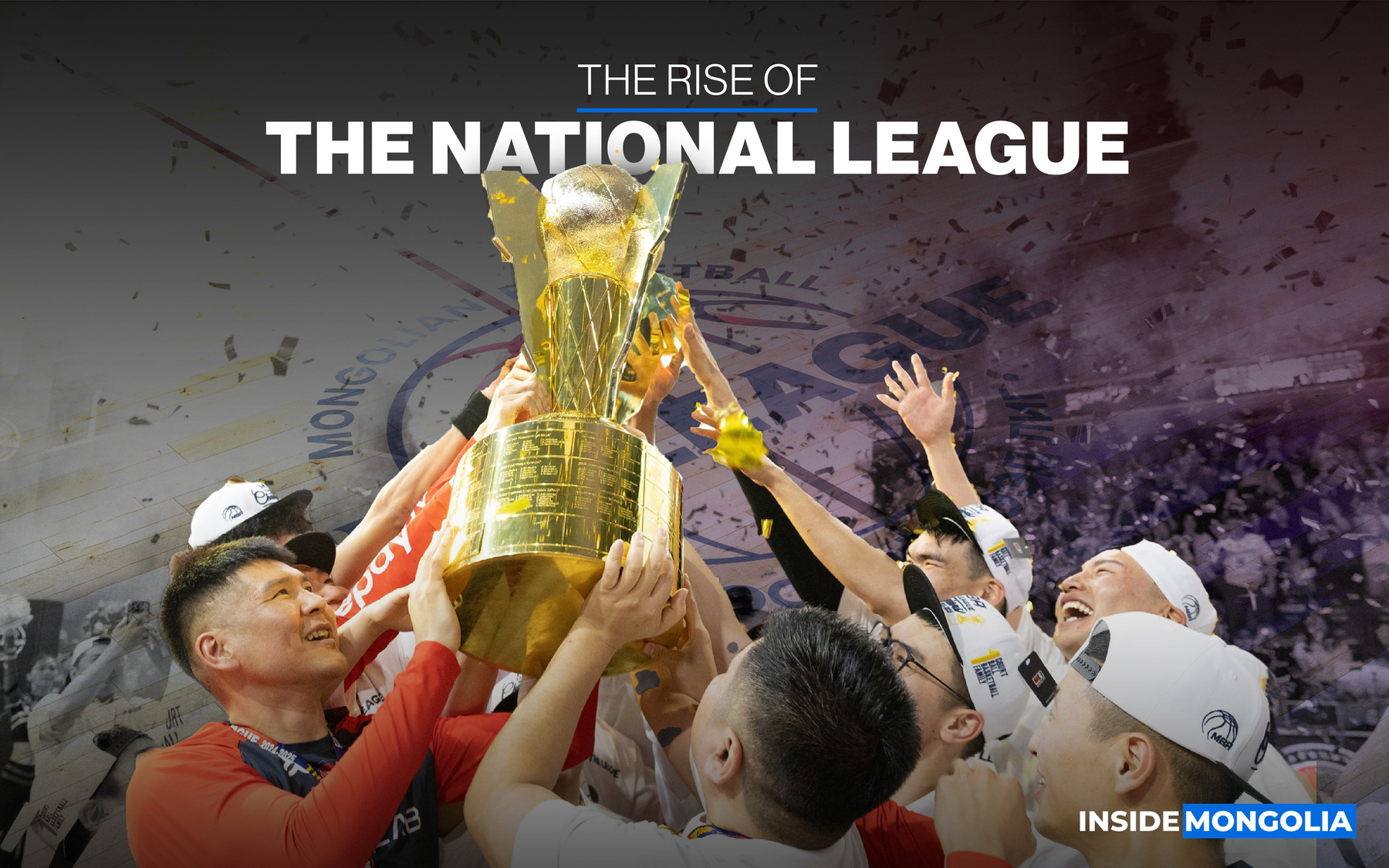
The 2025–2026 Men’s National Super League Playoffs started last week. Ahead of the postseason, here’s a look at how the National League has evolved.
⌚ In the Past
For much of its early history, the league relied on local talent, experienced periodic disruptions, and focused on domestic rivalries. While teams such as Xac Broncos emerged as dominant champions, meaningful professionalization, marked by the rise of import players and foreign MVPs, only began to take shape from the mid-2010s.
- 🌷 Building on this foundation, the league briefly expanded to 13 teams in 2023 before returning to 10 in 2024, reflecting efforts to broaden regional participation beyond Ulaanbaatar to cities such as Darkhan, Erdenet, and Khovd. Backed by basketball’s widespread popularity, growth remained steady before accelerating in recent years.
🚀 Now
The 2025–2026 season marks a clear turning point for the Men’s National Super League, reflecting faster development, stronger competition, and rising commercial appeal. SG Apes topped the regular season with an 18–9 record, narrowly ahead of defending champions Xac Broncos, while the top three teams, including BCH Knights, finished with identical records, underscoring the league’s growing intensity.
- 💥 Beyond the standings, the season was energized by emerging young domestic talent alongside high-impact imports, a surge in corporate sponsorships averaging 5 to 6 partners per team, and headline investments such as Selenge Bodons’ ₮2 billion recruitment of national 3×3 players and the return of the Former NBA superstar DeMarcus Cousins.
- 🤑 This momentum is also visible financially. SG Apes’ budget rose 81.8% to ₮4 billion, with roughly 70% funded by sponsors, while the launch of the Federation Cup, a 48-team, single-elimination tournament offering a ₮100 million prize, added further scale and high-stakes competition to the calendar.
At the same time, the league took a decisive step onto the international stage. From the 2025–2026 season onward, the national champion will qualify for the East Asia Super League (EASL) following a landmark partnership announced in early 2025, significantly expanding regional exposure for Mongolian clubs.
Taken together, the Mongolian National Super League has evolved from a largely domestic competition into a fast-growing professional ecosystem defined by rising budgets, star imports, corporate backing, new tournaments, and international pathways. The question now is not whether the league will grow but how fast, and how far it can go.
Comment