A History That Must Never Be Forgotten Nor Repeated!
Khulan M.
January 19, 2026
January 19, 2026
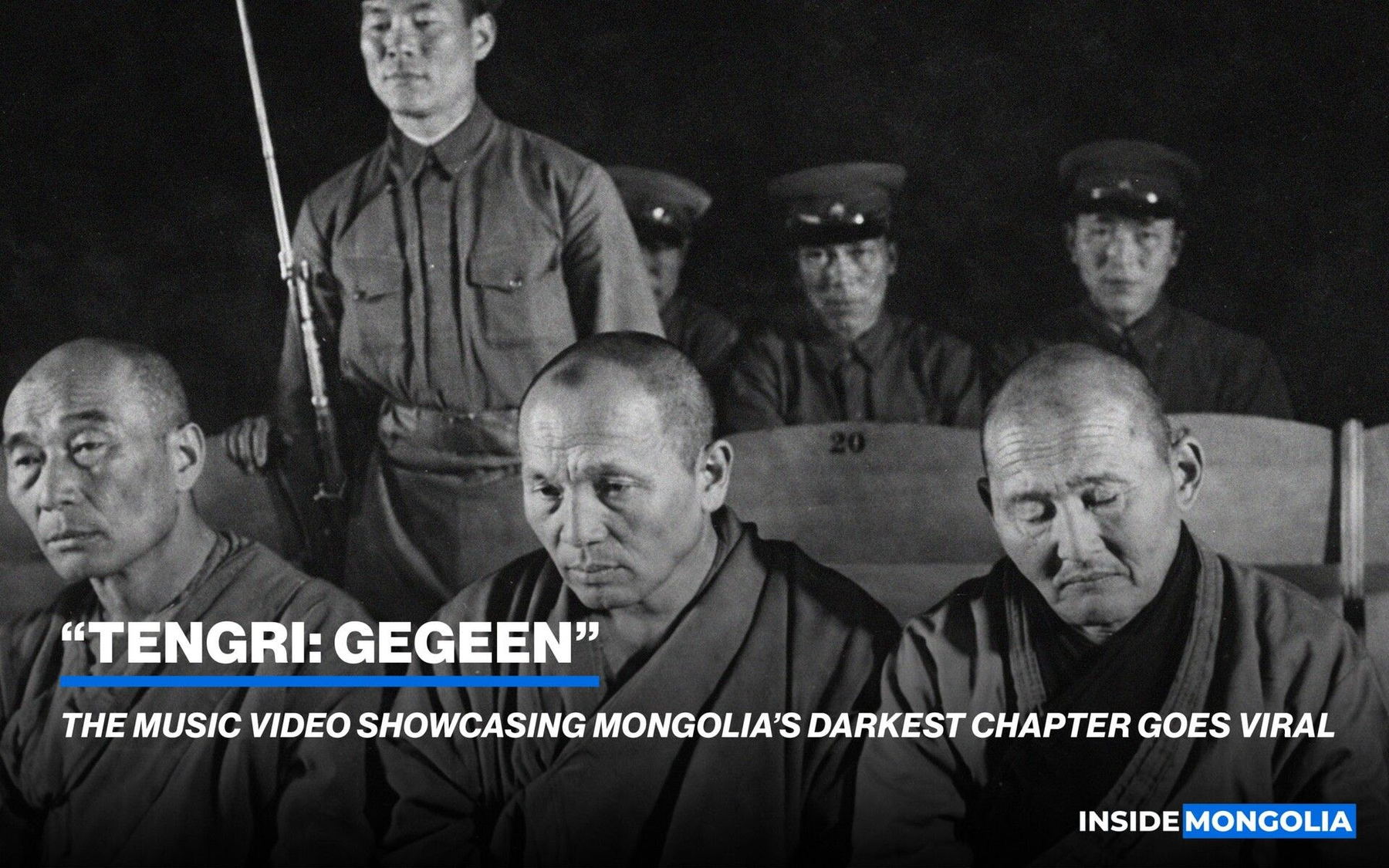
Mongolian artist ThunderZ’s newly dropped “Tengri: Gegeen” MV is making waves in Mongolia. This MV showcases one of the darkest times in Mongolian history, “The Great Repression.”
- 🎥 The MV illustrates a tragic love story between a Buddhist monk and a woman at a time when monks were forbidden from loving or forming families. Their attempt to escape ends in horror. The monk is captured and burned alive. Tragically, this was the harsh reality in Mongolia from 1920-1990, when the state became a killing machine against its own people.
🙅 Mongolia: A Death Penalty-Free Country
For context, Mongolia abolished the death penalty in 2012, becoming a capital punishment-free country, a hard-learned lesson from The Great Repression. Under decades of Soviet influence, the government carried out mass arrests, executions, and imprisonments of perceived “enemies of the state,” killing over 37,000 people, including monks, politicians, military officers, and ordinary citizens, a devastating loss for a population of just 800,000. The repression was especially brutal toward the Buddhist clergy.
- Over 700 monasteries were destroyed
- More than 17,000 monks were persecuted
- Around 14,000 monks were executed
In total, 10.9% of Mongolia’s adult male population and nearly 5% of the entire population were affected.
👇 Day of Remembrance: Victims of Political Repression
Since the creation of the memorial in front of the National Museum of Mongolia in 1997, September 10 has been observed as the Day of Remembrance for the victims of political repression. The day serves as a national moment of reflection, honoring those who lost their lives during one of Mongolia’s darkest chapters and acknowledging the families who continue to carry forward their legacy.
✍️ Words Carved in Memory
Inscribed at the base of the monument:
- In those years, burning faith was crushed,
- And brave hearts were torn apart.
- May the years of terror and despair
- Never fade from the memory of the Mongolian people.
On the inner wall of the monument, “No to the death penalty” is carved. Even today, Mongolians debate restoring the death penalty for serious crimes. But the memorial stands as a commitment that the government will never again turn into a killing machine against its own people, affirming Mongolia’s pledge to uphold human rights and human dignity.
Comment