Why Mongolia’s 4 Free Zones Matter for Investors?
Khulan M.
March 23, 2026
March 23, 2026
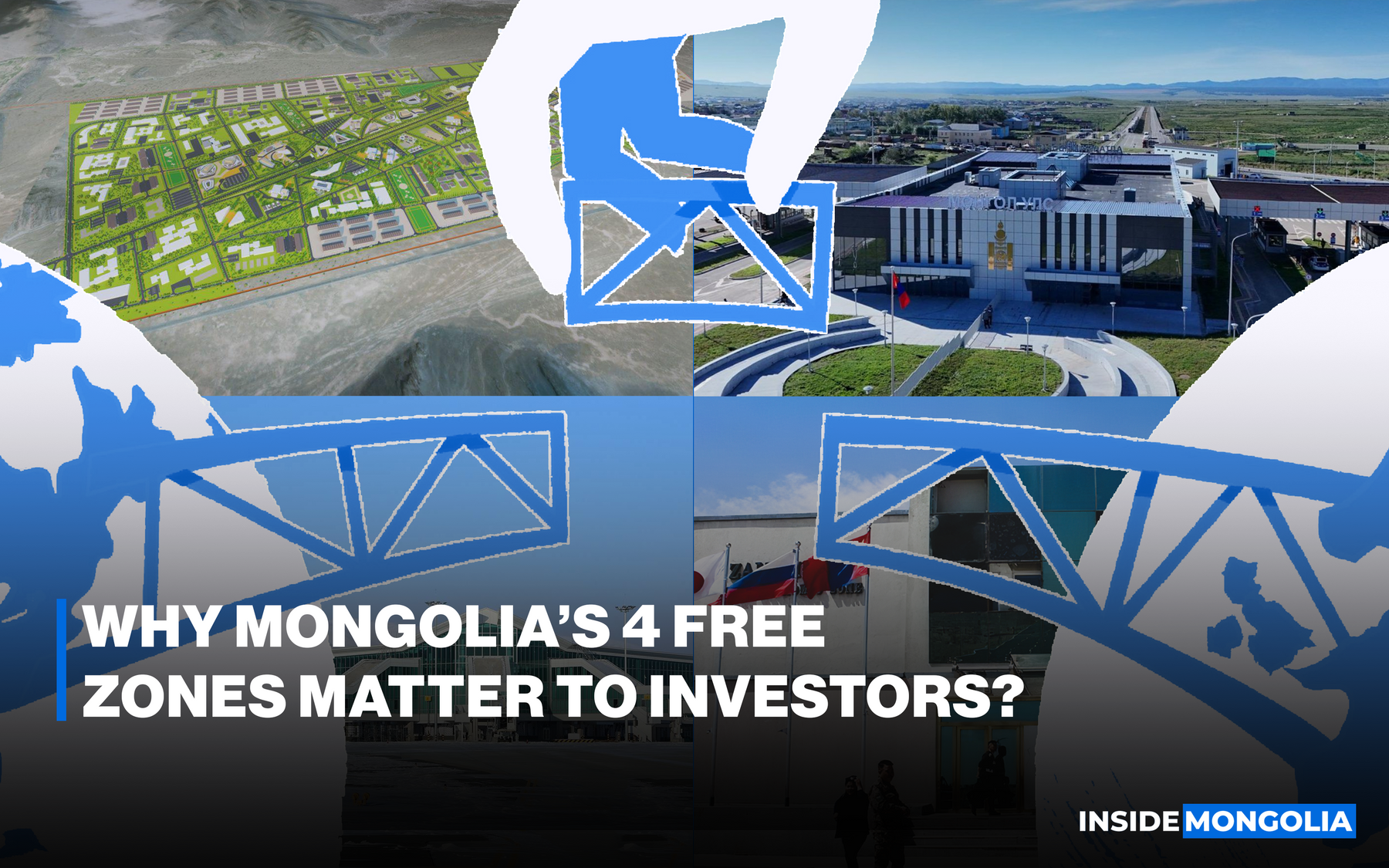
With tax and customs exemptions, Mongolia’s 4 free zones remain one of the country’s clearest tools for attracting export-oriented investment.
💰 Tax Free Zones
Mongolia has 4 free zones, Altanbulag, Tsagaannuur, Zamiin-Uud, and Khushig Valley, each operating under a special tax and customs regime outside the country’s regular customs territory. For investors, that structure matters because it can significantly lower the cost of importing equipment, moving goods, and building export-focused operations.
- 💎 The main draw is tax treatment. Under Mongolia’s legal framework, goods brought from overseas into a free zone are exempt from customs duties, VAT, and excise tax, while goods and services produced or sold within the zone by registered entities are also eligible for favorable tax treatment.
- 👛 Exports from the zones to overseas markets are similarly treated more favorably, making the regime particularly relevant for manufacturing, logistics, trade, and tourism projects.
Geography adds to the appeal. Altanbulag sits near the Russian border, Zamiin-Uud anchors Mongolia’s main gateway to China, and Tsagaannuur offers western access through Bayan-Ulgii. Khushig Valley, the newest and largest, is being developed near Chinggis Khaan International Airport as a longer-term hub for logistics, trade, and airport-linked commercial activity.
Overall, Mongolia’s 4 free zones remain one of the country’s most practical tools for attracting foreign investment, combining tax relief, customs advantages and strategic access to Russia, China and wider trade routes. While execution still varies by zone, the outlook is supported by the government’s push to update the legal framework for free zones and improve the broader investment environment. For exporters, manufacturers and logistics players, that makes the free-zone model a developing opportunity worth watching.
Comment