ADB Approves Record $225 Million Health Investment in Mongolia

Khulan M.
August 24, 2026
August 24, 2026
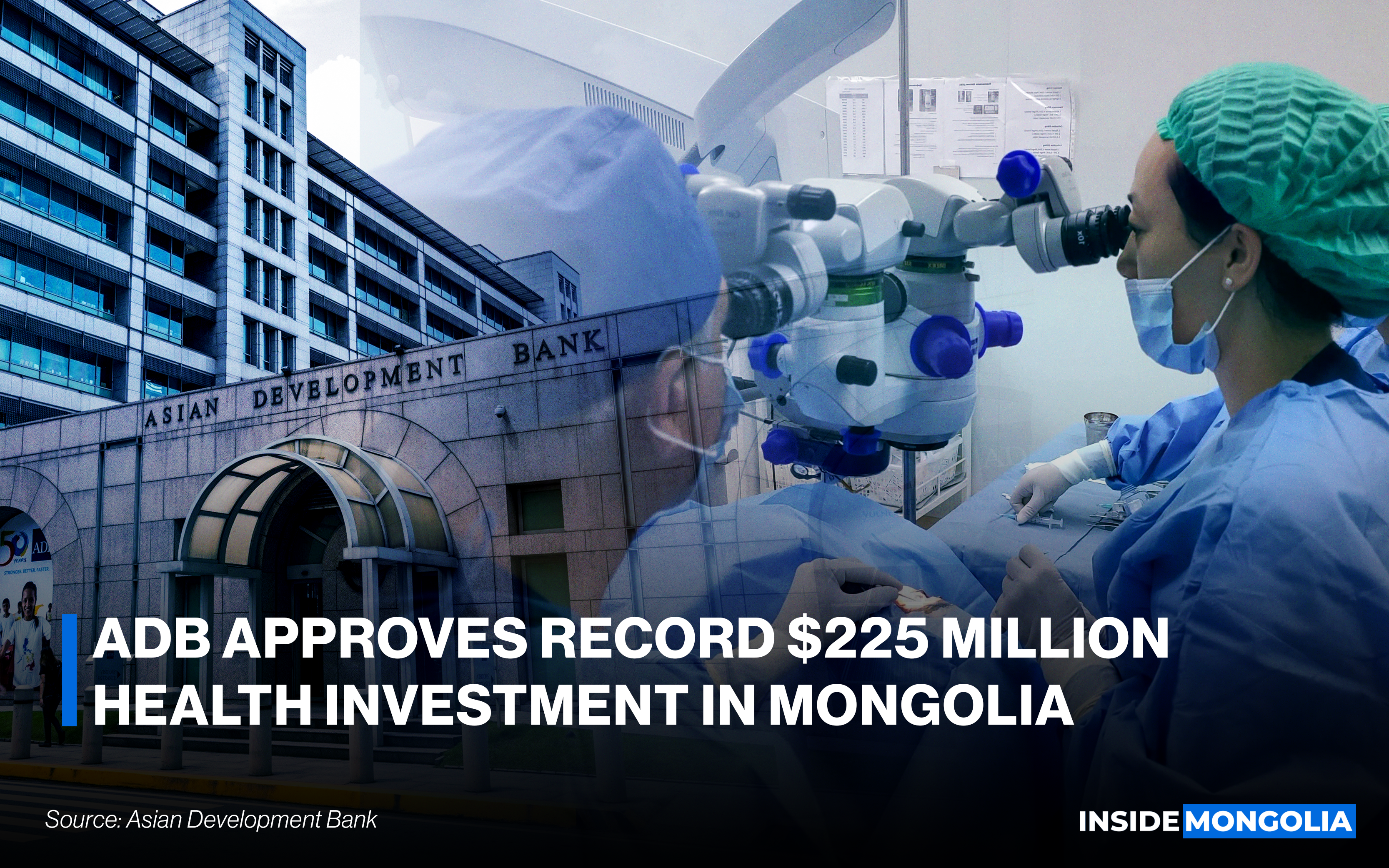
The Asian Development Bank (ADB) has approved a $225 million loan, its largest ever in Mongolia’s health sector, to upgrade provincial hospitals, expand emergency care, and bring specialized services closer to rural communities. By 2031, the project aims to improve access to quality care for more than half of Mongolia’s provincial population.
🗞️ What the Project Will Deliver
It will modernize 19 provincial hospitals and build a new 300-bed hospital in Uvurkhangai Province. 11 new soum health centers will open along major highways and border points. Facilities will gain stronger emergency departments, trauma and intensive care units, modern operating theaters, ambulances, and advanced diagnostic equipment for cardiovascular disease, cancer, and other complex conditions. Telemedicine and digital referral systems will link provincial hospitals with tertiary centers in Ulaanbaatar, while health workers receive capacity-building support.
👉 Why This Matters for Rural Families
Ulaanbaatar currently holds 66% of the country’s hospital beds. Many rural patients must travel hundreds of kilometers for specialized care, facing delays, high costs, and worse outcomes. Noncommunicable diseases already account for 73% of deaths nationwide. The project also strengthens emergency readiness for dzuds, floods, and heatwaves through climate-resilient infrastructure.
🏥 Broader International Support for Mongolia’s Health Sector
ADB has been Mongolia’s leading health partner since 1994, providing about $419 million in loans, grants, and technical assistance. The World Bank financed the COVID-19 Emergency Response and Health System Preparedness Project over $70 million and an earlier $19.5 million E-Health Project.
- 💰 The European Bank for Reconstruction and Development (EBRD) has supported a $43.2 million loan for a new 250-bed hospital in Darkhan and a $34.9 million loan for a specialized cardiovascular facility in Ulaanbaatar.
Finally… As you can see, Mongolia has secured substantial loans and funding that could transform its healthcare sector. Yet major gaps in healthcare access and infrastructure persist. The question is increasingly not how much money Mongolia receives, but how effectively it is spent, with governance, procurement and corruption remaining key concerns.
Comment