Wildfire has burned 80% of Mongolia’s Numrug, strictly protected area

Khulan M.
October 19, 2026
October 19, 2026
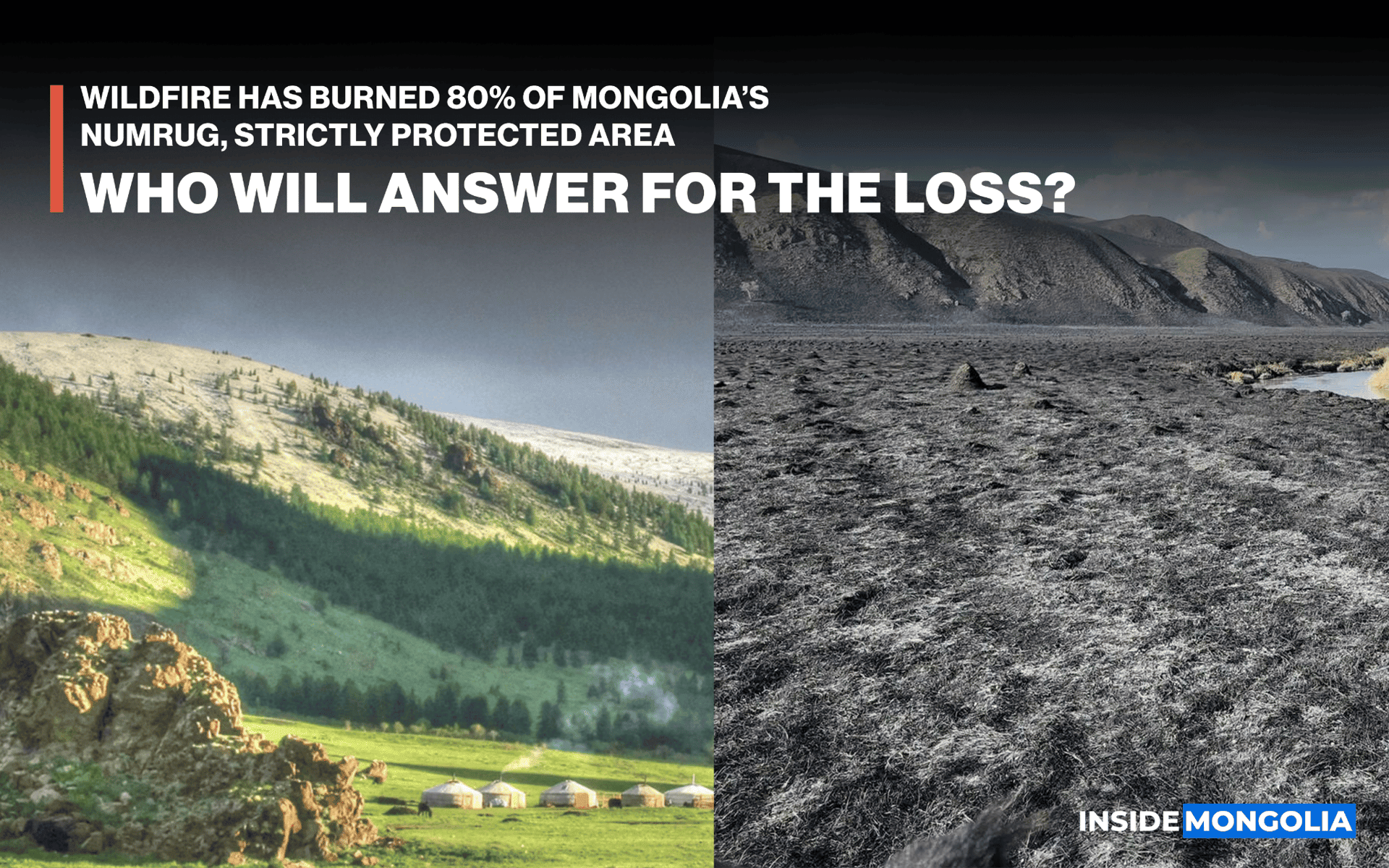
Telecom giant Mobicom Corporation’s visit to Numrug reserve preceded a wildfire that burned 80% of the protected area. More than 10 days later, accountability remains unclear.
🔥 How the wildfire started
The wildfire broke out on October 8 after a vehicle carrying Mobicom staff reportedly caught fire in the reserve’s core zone in Dornod Province. The blaze spread across an estimated 96 km east to west and 82 km north to south before being extinguished on October 16.
- 💨 A total of 109 Mongolian personnel took part in firefighting efforts, while China deployed 2,000 firefighters to prevent the blaze from crossing the border.
Mobicom Corporation said that, its team was conducting telecommunications work in the area. Separate claims that the group was pursuing the endangered Hucho taimen fish remain unconfirmed.
👥 Who was in the Group?
The Border Protection Agency said 13 people had been authorised to enter the border zone between October 6 and 8. The group included Mobicom CEO Yasuhiro Ochi and company staff. U. Otgonbayar, the President’s younger brother and a member of parliament, was also alleged to have been among the group, but later denied being at the wildfire site, saying he was attending parliamentary sessions in Ulaanbaatar when the blaze began.
🌿 What was at Stake?
Designated a strictly protected area in 1995, Numrug is home to hundreds of plant and animal species, including Ussuri moose, otters and brown bears. The full ecological damage has yet to be assessed, leaving the long-term impact on this protected ecosystem uncertain.
⚖️ Who will be Held Responsible?
Mobicom Corporation CEO Yasuhiro Ochi publicly apologised for the wildfire 4 days after it began, but he remains the only person publicly reported to have addressed the incident or taken responsibility, despite 13 people being authorised to enter the border zone.
- 👀 Justice Minister G.Temuulen said those responsible, along with relevant border port officials, would face accountability and compensation claims. Depending on the circumstances, criminal penalties may include 1 to 12 years in prison, alongside compensation for environmental damage.
Finally… More than 10 days after the wildfire, the destruction of one of Mongolia’s most protected landscapes risks being overshadowed by other political issues. Yet the lack of public scrutiny and demands for accountability raises a bigger question. Will authorities investigate not only the company involved, but also the officials who authorised entry into the protected area and any other agencies responsible for oversight or will they remain in the shadows?
Comment