D.Jamiyansharav: Careers Are Built Through Experience, Not Titles

Khulan M.
June 8, 2026
June 8, 2026
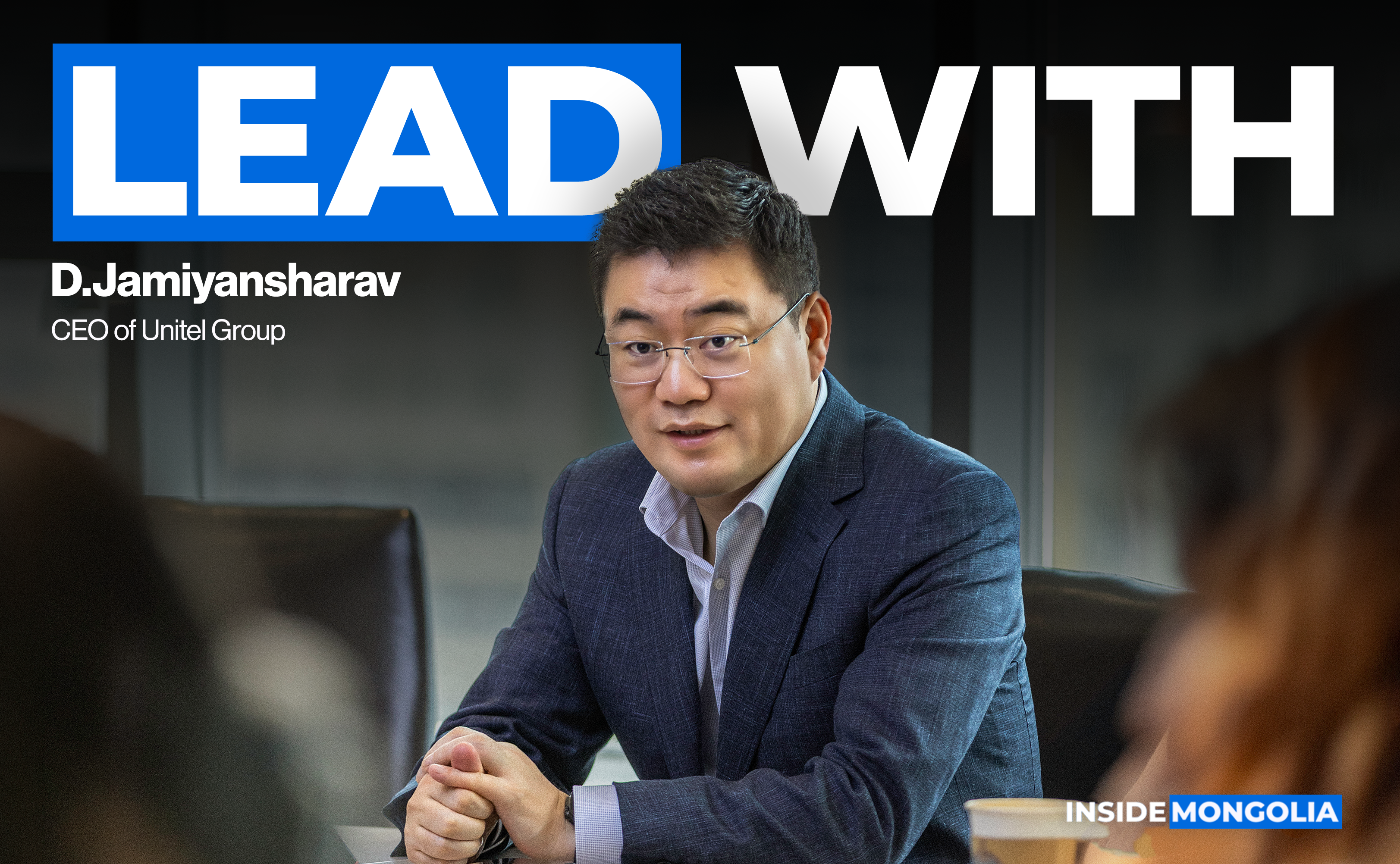
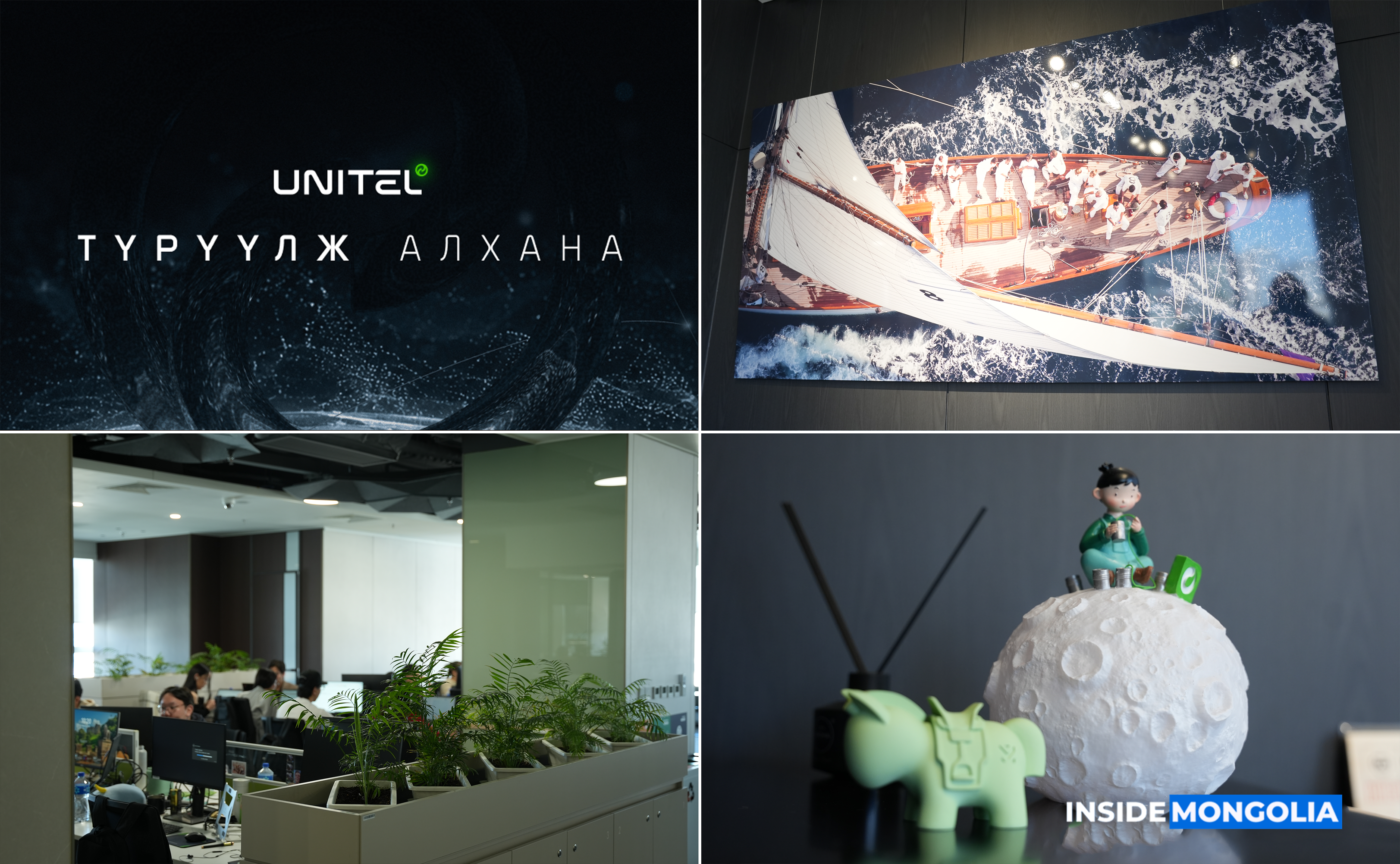
Unitel Group recently unveiled its strategy for the next 2 decades, accompanied by a new visual identity and rebrand. In connection with this milestone, we sat down with D.Jamiyansharav, who has served as the Group's CEO since 2022, to explore his leadership philosophy and career journey.
He joined Unitel Group in 2010 as Deputy Director of Finance, and has spent the last 16 years of his career building it alongside the company. He is the fifth CEO in Unitel Group's 20-year history.


- Khan-Uul University, Applied Mathematics & Business Management /1999–2003/

- Financial Analyst and Manager, MCS Electronics LLC /2003–2007/
- Director of Finance of MCS Electronics LLC /2007–2010/
- Deputy Director of Finance of Unitel Group /2010–2012/
- Deputy CEO, Business Development and Strategic Planning, Unitel Group /2012–2022/
- CEO of Unitel Group /2022–Present/

What is your leadership philosophy?
First and foremost, a leader must have absolute clarity on where they are taking the organization and what goal they are moving toward. After that, they need to continuously monitor and assess whether the strategy and path toward that goal are sound. Once those 2 are clear, the most critical element is execution, meaning the leader's core responsibility is to align people around a single direction, ensure they understand the goal, and guide them day by day.
At the organizational level, defined structures and principles are non-negotiable. At the individual level, however, every team member is different. Each person has their own strengths, capabilities, and areas where they excel, and equally, areas where they fall short.
Personally, I place far more emphasis on building on people's strengths than on trying to fix their weaknesses. In other words, when you place someone in a role and environment that matches what they do best, you get better results.
Some believe that addressing a person's shortcomings will solve the problem, but in reality, changing people is extremely difficult. Focus on their strengths, and the weaknesses tend to fade into the background on their own.
What's the one non-negotiable quality that makes or breaks a leader?
Leadership is not about walking alone. It's about guiding a team that is moving together toward a single goal. There is no such thing as a team member without a role. But the leader's most essential function is to be able to clearly communicate to the team why this goal, why this work matters. Of course, you cannot simply show up one day and declare yourself a leader. This is work that must be done consistently, every single day.
True leadership is built on consistency. Every small daily action, every small guidance given, these collectively produce the team's results. Only then can a team perform well, and leadership translates into real outcomes.

What's a chapter of your leadership you'll never forget?
Over the past 20 years, Unitel Group has been led and shaped by five CEOs, I am the 5th. Rather than focusing on my own story, it is more meaningful to look at where the company stands today, as it enters its next 20-year phase with a newly introduced identity.
Our ambition for the next 2 decades is to operate in the market with a distinctly different presence, bolder and more decisive. The new brand identity is closely tied to this direction. It is not simply a change of logo, but a statement of intent for the years ahead. Over the past 3 years, we have worked internally on strategy, with more than a year dedicated to refining and defining it. In essence, our focus going forward will be on four areas:
- Telecom: The core of Unitel’s business and communications infrastructure.
- Media & Entertainment: Platforms and content, including Univision and LookTV.
- Enterprise Digital Solutions: Addressing the growing demand for localized digital transformation tools, including through our subsidiary Nexmind.
- Personal Digital Lifestyle Ecosystem: Expanding services built around platforms such as the Toki app.
The first 2 represent established strengths where we will continue to consolidate and grow our position. The latter 2 are newer areas, where significant work lies ahead in building solutions, adopting global best practices, and developing new capabilities tailored to the Mongolian market.
Naturally, change of this scale is met with mixed reactions at first. However, this decision was made with conviction.
As our business becomes increasingly technology-driven and innovation-led, we believe the next phase of Unitel should be more dynamic, more ambitious, and more compelling. The new identity reflects that direction.

What are three things people should know about your career?
1. My early career began at MCS Electronics in 2003 after university, where I progressed to Director of Finance by 2010. It was a period of intense workload and continuous learning. I was responsible for analyzing financial statements across multiple subsidiaries and preparing board materials, where accountability was absolute. One moment that still stands out is when I worked through the night preparing reports, only to lose everything in a system crash. I reset my laptop, reinstalled all the software, redid all the reports overnight, finished at 7 in the morning, went home briefly to shower, and walked straight into the meeting. The pressure was extreme. But the experience taught me resilience, accountability, and execution under pressure.
2. The second turning point was in 2010, when I joined Unitel as Deputy Director of Finance. 2 years later, I was offered the role of Business Development Director, a profound shift for me personally. A finance professional operates in the world of rules, calculations, and controls, a business professional operates in the world of growth, risk, and market competition. These are 2 entirely different worlds. What that transition taught me is that a person must not confine themselves to one domain, they must be willing to challenge themselves in unfamiliar territory without fear.
3. Being offered the role of CEO of Unitel Group in 2022 was one of the defining moments of my career. I believe that everything I had learned over the years, the accumulated experience across multiple functions, the ability to carry pressure, proved its worth at that moment.
Ultimately, I want to emphasize that a career is not simply about moving up titles. In the broader picture, it is about continuously developing yourself, and being ready, when the opportunity arrives, to seize it and carry the responsibility that comes with it.
Who or what has had the greatest influence on your career?
Many things shape a career to varying degrees, education, how you start out, parents, colleagues. But I believe the most important factor of all is the individual themselves.
The decisions you make, what you choose to value, how you invest in your own development, all of these, which depend entirely on you, determine the opportunities that come next.
That said, the person who has had the most concrete influence on my career is the then CEO, R.Ganbold. He was the one who proposed that I move from finance into a business function. And he did not simply make the offer, he continuously advised me, guided me, and supported my development. That has had an immeasurable impact on where I am today.
Looking back, beyond simply doing my job well, I was determined to live up to the trust placed in me. On a personal level, I see maintaining trust as one of the most important principles in life and work, and a quality that should be consciously developed.


How do you keep developing yourself?
In my early career, learning was narrowly focused on improving specific skills, attending training courses, or earning certifications. Over time, that perspective has changed fundamentally, I now see the workplace itself as the greatest school.
To do your job well, you must learn continuously. If you are preparing to launch a new product, you first research the industry, read, and build understanding. Then you synthesize and analyze. Then you adapt that knowledge to the specifics of the Mongolian market and develop a solution. Finally, you bring that idea to life, take it to market and communicate it to users. Every step in that process is an act of learning.
Many young people think, "I haven't attended a single training, I haven't learned anything new." In reality, a person who is doing their daily work with genuine care is learning something at every step, from high-performing colleagues, from external reading, from reflecting on their own gaps. That accumulated learning, over three to four years, creates a profound difference.
The process of improving yourself every day so you can do your work better is the most meaningful learning there is.

How do you stay on top of your workload?
The most important method for me is focus. A large volume of work arrives every day, and trying to do everything at once makes it impossible to deliver meaningful results. I prioritize by importance and direct my attention to what matters most. Not everything needs to be done today, and not everything deserves equal attention or energy. When I start a task, I focus on it fully in order to execute it well. For me, doing the most important thing properly is more effective than doing many things in parallel.
The other essential tool is delegation. But delegation is not simply assigning tasks and stepping away. It begins with alignment, clarifying how to approach the work and what to prioritize before handing it off. Done well, it enables independence and improves quality. Without that initial alignment, misunderstandings and inefficiencies emerge. The most effective approach is simple, guide clearly at the start, then trust and hold accountability.
How many hours were you working at the most demanding point in your career, and what does a typical day look like for you?
Working hours are inherently relative. The level of responsibility you carry shapes both the volume of work and the mental space it occupies. Early career years were the most intense.
In our group, which operates across multiple interlinked sectors, any single issue often has to be viewed from multiple angles simultaneously. In that context, measuring work in fixed hours becomes too narrow. At the CEO level, work is not confined to the office, it follows you throughout the day, whether at home, in transit, or even at the start of the morning. In that sense, it inevitably requires a degree of personal sacrifice. Over time, however, as systems mature and trust in teams deepens, the rhythm becomes more balanced.
My workdays typically run from morning through a continuous stream of meetings and discussions, sometimes starting over breakfast. With limited discretionary time, I aim to use each hour intentionally.
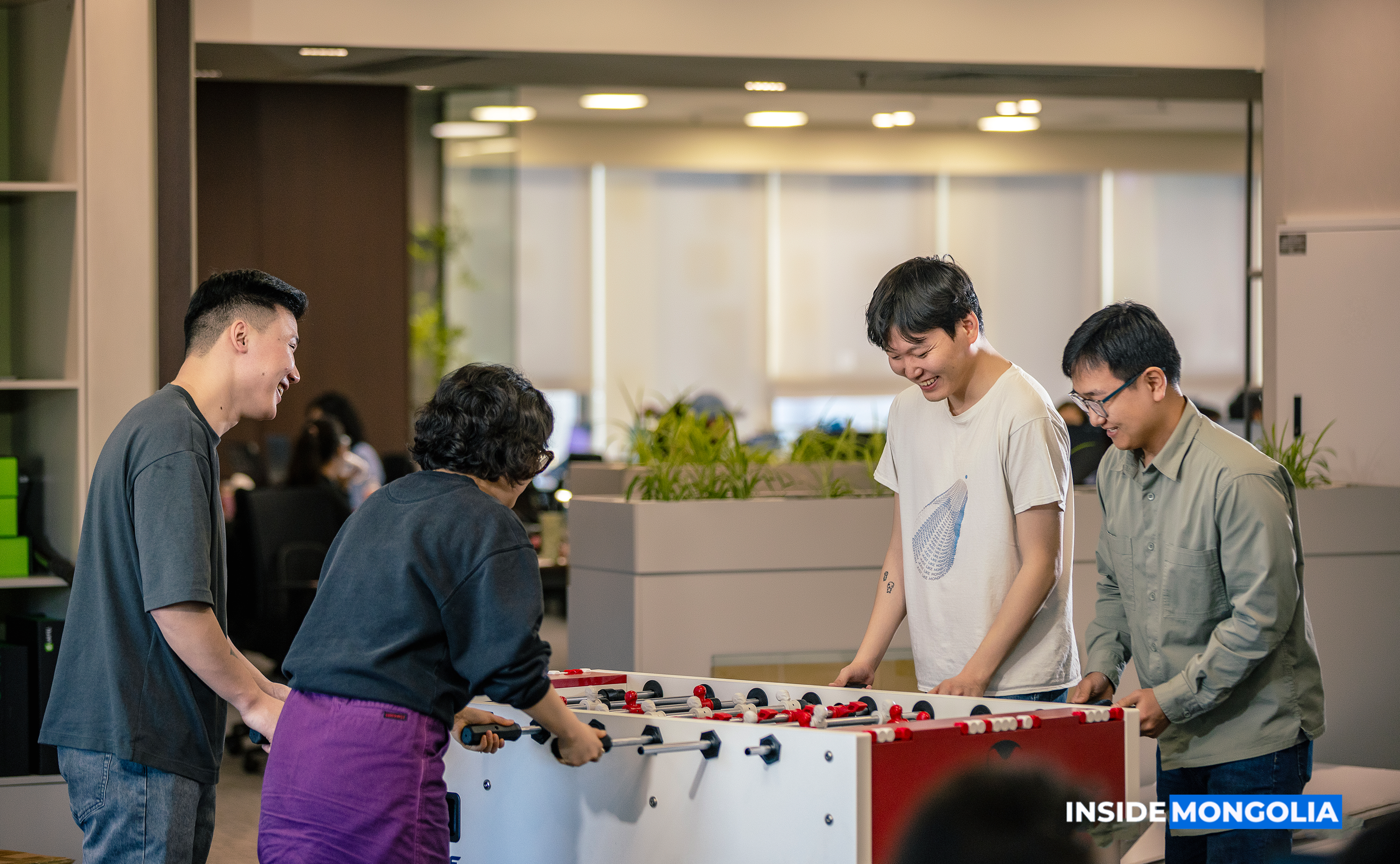
The first hour in the office is usually dedicated to setting priorities for the day, deciding what truly matters. The rest of the day is largely meeting-driven, discussing issues, making decisions, and exchanging perspectives. Our company culture also tends to favor informal, fluid interactions over rigid boardroom settings, conversations happen in offices, corridors, and over coffee, where many issues are resolved in real time.

What does it actually take to build a successful career?
I think many people have a somewhat distorted understanding of what a career is. A career is only one dimension of why people work. It is not the entirety of meaning or purpose. A useful analogy is clothing. Its primary function is protection and warmth. Second, it must be comfortable, if it isn’t, you don’t wear it. Third, it should present you well and give you confidence.
Work operates on a similar logic. First, it must meet financial needs, compensation matters. Second, the environment, colleagues, and organizational culture must be supportive, feeling comfortable at work each day is essential. Third, the work itself should provide meaning and satisfaction. That sense of fulfillment is what sustains people over the long term, both professionally and psychologically.
Yet too often, that satisfaction is conflated with career progression alone, as if success only exists in constant upward movement. That is a limited view. For some, deep satisfaction comes from mastering their craft at the highest level, rather than moving into management. That path is equally valid, and no less meaningful.
In our company, we have increasingly focused on recognizing contribution more accurately and aligning it with fair compensation. Ultimately, a career is not defined by hierarchy. What matters is whether people feel the value of their work, and whether it brings them meaning and fulfillment.
After 2 decades in leadership, what does a great employee actually look like in your view?
I am the fifth CEO in this company’s 20-year history. Over that time, I have worked with many different people and observed many teams. Looking back, two things have consistently mattered most, consistency and the ability to be a strong team member.
Regardless of role or title, the individuals who earn trust within the team and work in genuine alignment with others tend to be the most valuable. A company, at its core, is a team moving together toward a shared goal. Within that, everyone gives and receives work, accountability, and trust.
Being a strong team member is itself a critical capability, and a real skill.
In that environment, people learn from one another, take on responsibility, and build trust over time, with the whole team observing. Gradually, confidence builds that a person can carry greater responsibility. Ultimately, this connects directly to company culture. Those who succeed over the long term are the ones who internalize how the team works and consistently pursue shared goals in a genuinely collaborative way.

How big is your team?
The company has over 2,500 employees in total, with 15 under my direct leadership.
Where do you get your information?
For day-to-day information, I regularly follow social channels, business news, and international sources. For specific issues, I make a point of going directly to primary sources such as government policy documents, sector reports, research. I also place significant value on information from my immediate professional network. The business environment is changing so rapidly that staying current has essentially become part of the job itself.
Book recommendations?
I do read books. But lately I have found myself drawn more to Medium. It allows me to access a broader range of information more quickly, and it gives me a timely view of current trends, new ideas, technology, and shifts in business thinking.
Podcast recommendations?
With podcasts, I tend to choose based on the guest rather than the topic. Who is speaking, the experience they bring, and the perspective they hold matter more to me than the subject itself. Recently, I’ve been listening more to conversations around health.
Comment