Hello, Winter Crisis: Ulaanbaatar on the Edge of a Freeze!
Khulan M.
September 15, 2025
September 15, 2025
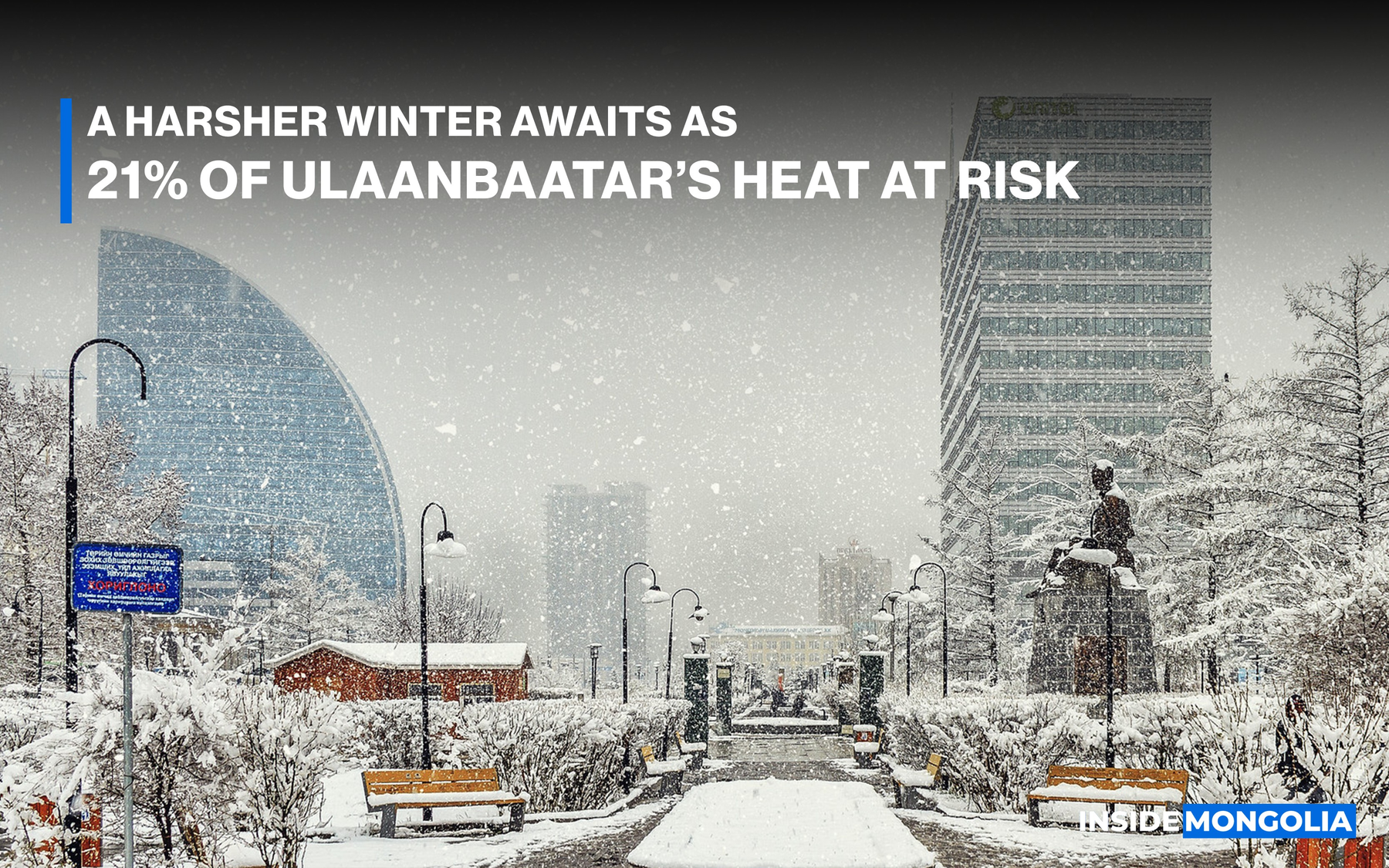
Every winter, Mongolia faces a harsh energy crisis that overshadows even its extreme cold. This year, the situation could worsen, not due to the weather, but because Power Plant III, the country’s second-largest energy source, has been damaged.
🔗 Infrastructure Upgrades: A Step Toward Energy Efficiency
For the first time in 30 years, Ulaanbaatar is upgrading 87.8 km of pipelines and insulating 200 prefabricated buildings, saving an estimated 10 MW of energy. Heating tariffs, set to double to ₮84,000 for a 50 m² apartment, are frozen until year-end. The city will phase out raw coal, shifting to improved briquettes at ₮3,750 and semi-coked coal at ₮5,000.
- 🤔 The cleaner fuel burns longer and cuts emissions by 40%–50%, but Ulaanbaatar will import 306,000 tons of semi-coked coal and 40,000–45,000 tons of briquettes from China, costing ₮226 billion and potentially straining foreign reserves.
🔍 The Energy Balance
Despite these measures, Mongolia remains highly dependent on energy imports. Last year, Mongolia imported 2.9 billion kWh of energy, accounting for 24.6% of total consumption. While domestic energy production has grown 22.5% over the past 5 years to 8.8 billion kWh, imports have surged 68% in the same period.
- ⁉️ Will Imports Skyrocket?: Power Plant III normally supplies 21% of Mongolia’s thermal energy, second only to Power Plant IV. Although emergency repairs are underway, 70% of the plant’s equipment has already exceeded its service life, limiting the benefits of any short-term fixes. If production falters, Mongolia will be forced to increase electricity imports from China.
Overall… Governors are banking on the Buuruljuult power plant, scheduled to begin operations in December, while also relying on infrastructure upgrades and cleaner imported fuel to manage winter energy needs. In the long term, heavy dependence on imported coal and aging domestic power plants exposes structural vulnerabilities, and without accelerated domestic energy development, Mongolia’s energy security remains at risk.
Comment