UB City VS UBCab: A Clash Over an EV Taxi Project
Khulan M.
January 5, 2026
January 5, 2026
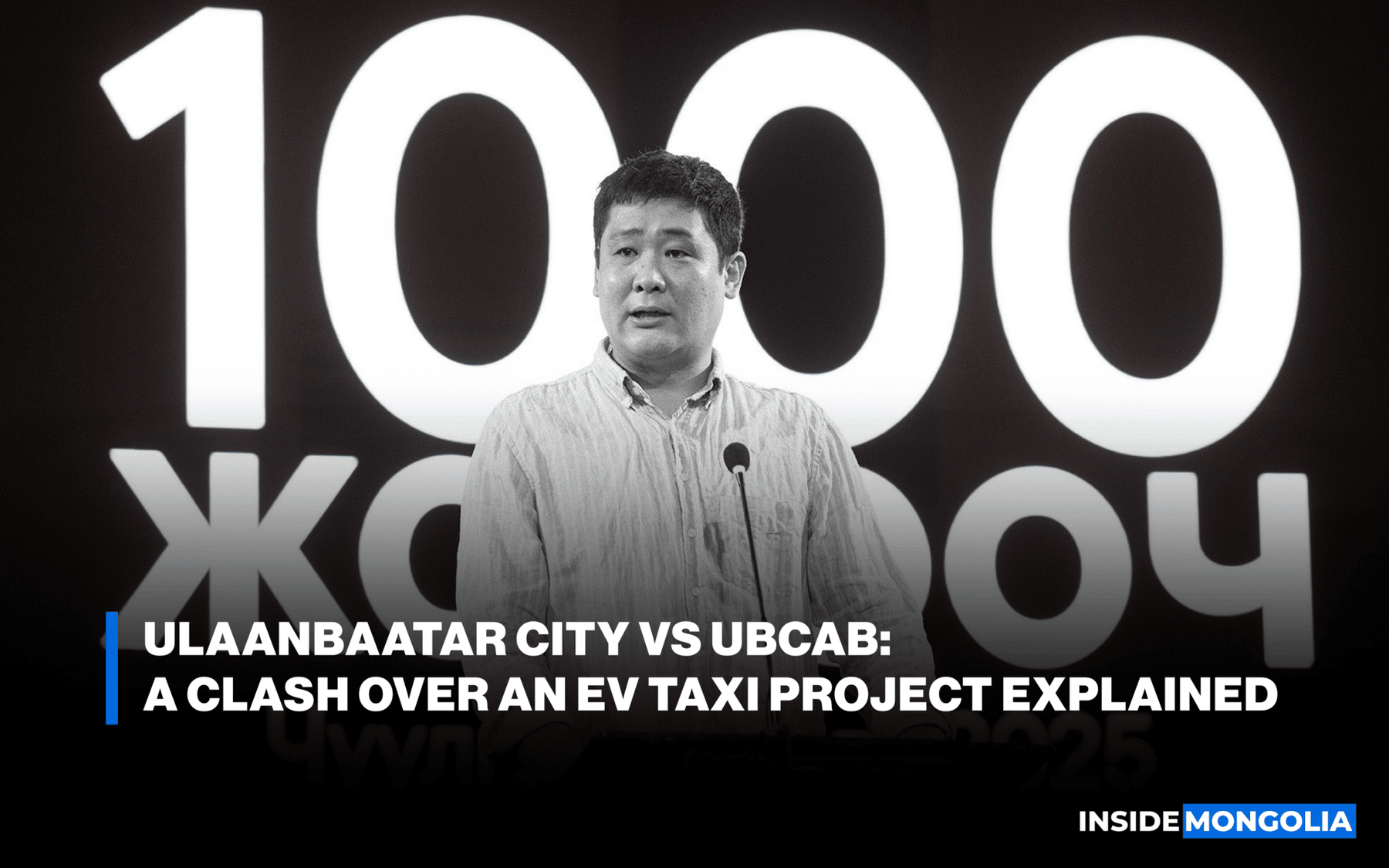
On December 26, the Ulaanbaatar City Council approved a plan to introduce 2,000 electric (PHEV) taxis through a public-private partnership, sparking strong backlash from existing market players. The decision has since escalated into a public dispute between the city government and UBCab, one of Mongolia’s largest ride-hailing platforms.
- 🚗 Project Goals and Budget: The initiative aims to tackle traffic congestion, illegal taxis, and growing tourism demand by deploying 2,000 EVs over five years, integrated into a centralized, tech-driven system. With a total budget of ₮77 billion, city officials say the project will enhance service quality, improve safety, and reduce pollution.
⚠️ The Pushback
Immediately after approval, UBCab’s CEO criticized the project on social media, warning it could distort market competition. Tensions intensified when the Governor of Ulaanbaatar accused UBCab of monopolistic behavior, suggesting the company was behind the public outcry.
🤔 Taxi Market Context
Mongolia’s ride-hailing market has been competitive since 2013, with multiple platforms including ABA, Tapa, EZCab, EasyRide, Maxim, Zip Taxi, iTaxi, and Mongol Taxi. New entrants such as Tino are also expected soon. Observers argue that the real issue is uneven regulation and the creation of a state-supported competitor with access to zero-interest financing, permits, and institutional backing, advantages that private operators cannot match.
🚕 UBCab’s Business Explained
UBCab operates in 16 provinces, serving 100,000 drivers and 1.6 million users. Its app (v4.0) offers taxi services, food delivery, and plans for additional on-demand offerings, centralizing services much like Uber. The company also partnered with BYD to deploy EV taxis in Ulaanbaatar city.
In short… The city frames the EV taxi project as a move to standardize the industry and ease traffic congestion. UBCab, meanwhile, views it as only the first step toward a larger state-backed “super app” called Hotula, raising concerns about competition and the future of private operators. What’s your opinion on this case?
Comment