Mongolia Moves to Regulate Children’s Social Media Use

Khulan M.
July 27, 2026
July 27, 2026
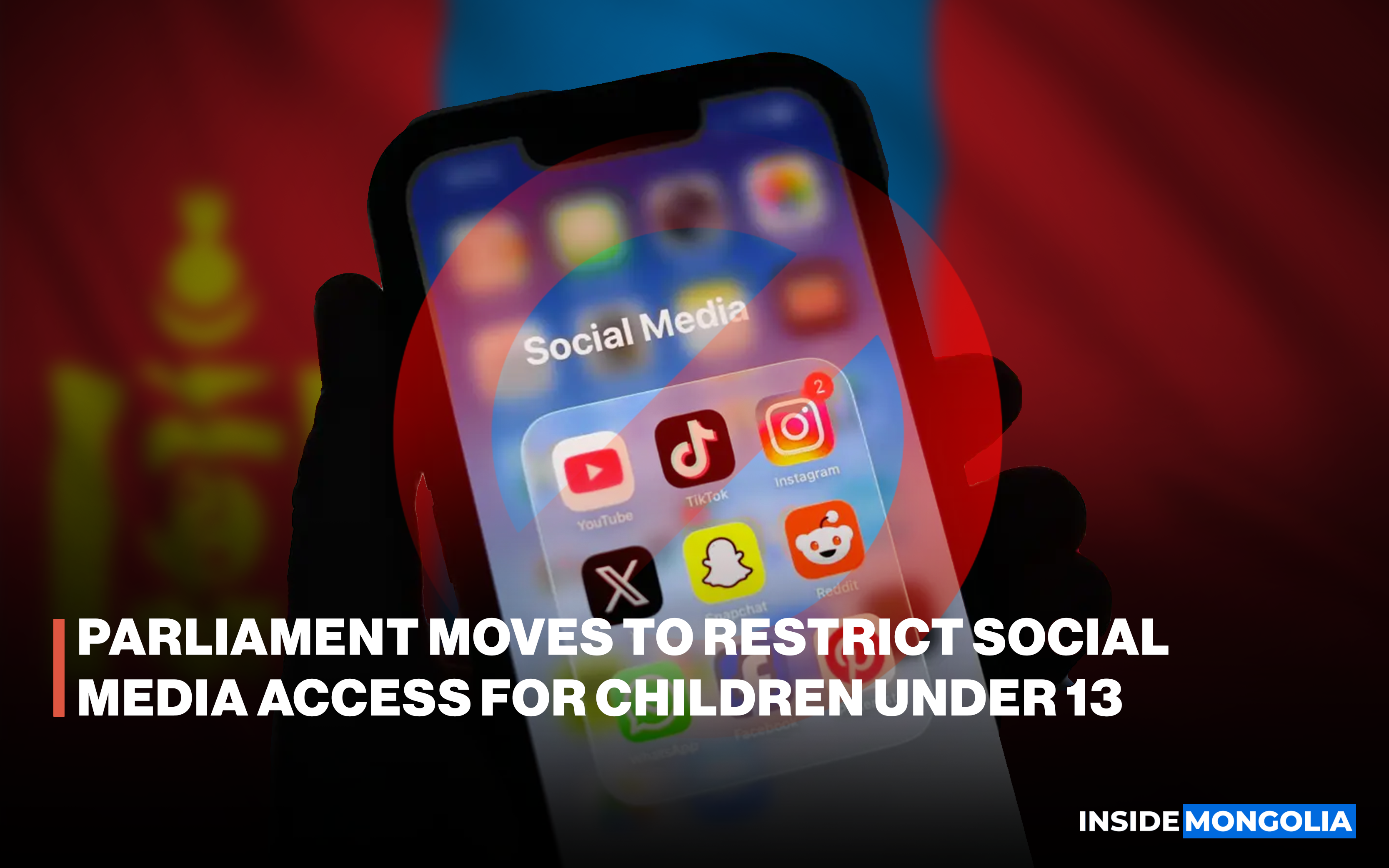
Mongolia has taken a significant step toward protecting children online. A group of Members of Parliament recently submitted the draft Law on Regulating Children’s Participation in Social Media to the Parliament. The bill aims to create the country’s first comprehensive legal framework for children’s digital safety.
🙋♂️ What the Draft Law Proposes?
The core provision bans children under the age of 13 from creating or maintaining accounts on social media platforms. For those aged 13 to 16, the law introduces stricter rules such as platforms would be required to offer age-appropriate versions of their services, limit addictive design features, and obtain verified parental consent. Companies that fail to comply could face penalties.
🔎 Why the Age of 13?
The age threshold of 13 is not arbitrary. It aligns with international standards, including the U.S. Children’s Online Privacy Protection Act (COPPA) and the default minimum age set by major platforms such as Instagram, TikTok, and Facebook. Lawmakers argue that children under 13 lack the cognitive maturity to handle online risks, while those between 13 and 16 still need structured safeguards during a critical developmental stage.
🤔 The Scale of the Problem
Mongolian children are already heavy users of social media. According to available data, a large share of teenagers are active on Facebook, TikTok, and Instagram. More concerning are the safety findings, a Save the Children survey found that 1 in 2 children has experienced cyberbullying at least once. A 2025 UNDP study further revealed that roughly 1/3 of children aged 9–12 and more than half of those aged 13–17 reported being bullied or insulted online.
- 🔢 These numbers help explain the urgency behind the bill. Lawmakers and child-rights advocates point to rising cases of online harassment, exposure to harmful content, and mental-health impacts as evidence that voluntary platform policies are no longer sufficient.
👉 What Happens Next
The draft is currently in the early stages of parliamentary review. If passed, it would place new obligations on both social media companies and parents, marking a major shift in how Mongolia approaches children's digital lives. However, enforcement could prove difficult, and overly strict restrictions may simply push children toward less regulated corners of the internet.
For now, the submission of the bill signals that Mongolia is ready to treat children’s online safety as a matter of law rather than private responsibility.
Comment