Mongolia’s Government Is Building a Fiscal War Chest for the Elections

Khulan M.
September 7, 2026
September 7, 2026
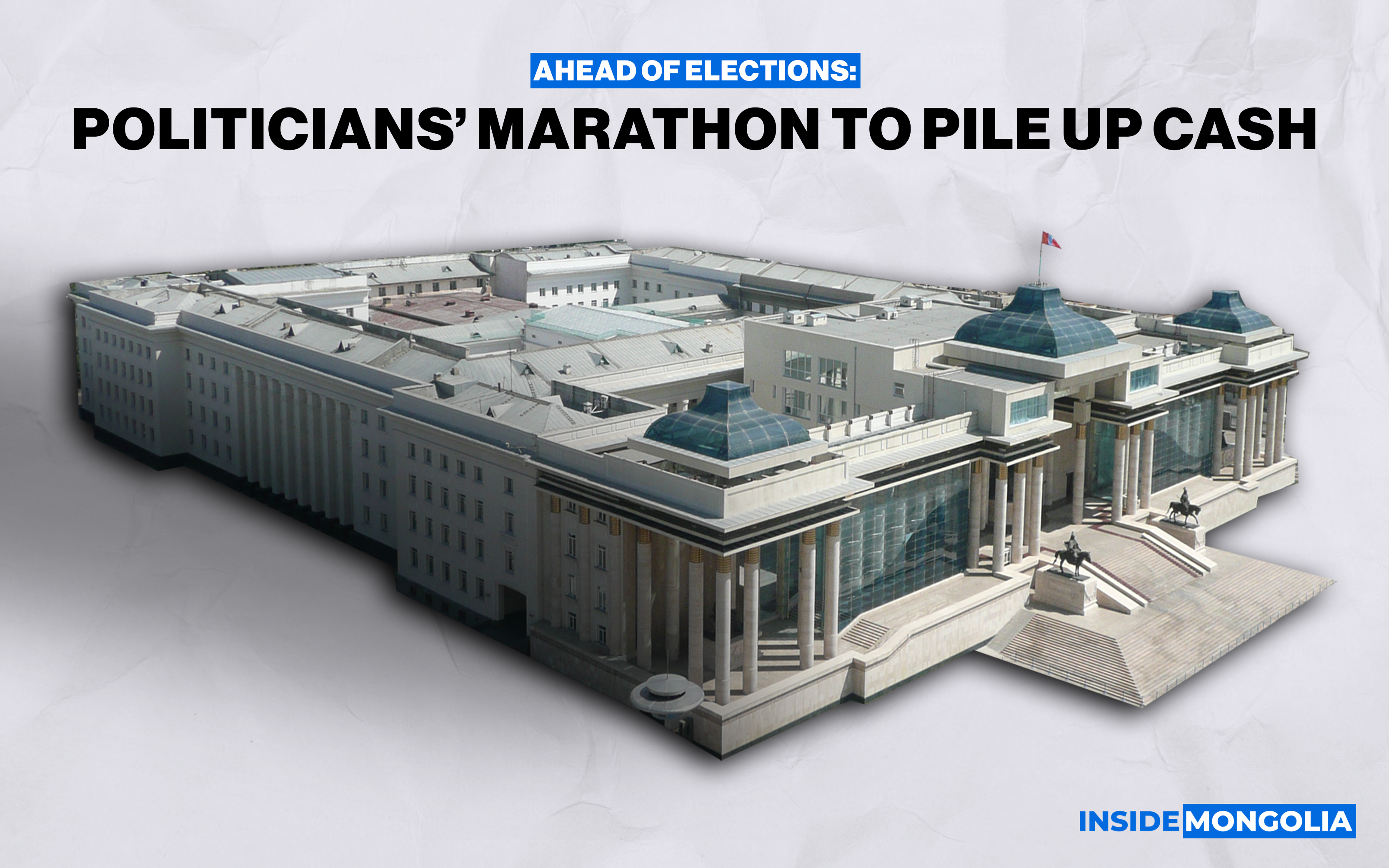
The next two years will be decisive for Mongolian politics, with a presidential election in 2027 and a parliamentary election in 2028. Against this backdrop, the 2027 budget is set to surge past ₮40 trillion, raising questions over how much money the government is building up for the election cycle.
👀 The Election-Year Pattern
Since 2008, budget expenditure has grown by an average of 28.5% in election years, 13.4 percentage points higher than in non-election years. Spending has repeatedly jumped ahead of elections, rising 47.1% in 2008 and 20.4% in 2012. The pattern continued in 2024, when spending also recorded strong growth on an outturn basis.
💭 Where Will the Money Come From?
The government has proposed raising expenditure by roughly ₮10 trillion from the approved 2026 level to a record ₮43.6 trillion, with a ₮2.3 trillion deficit and ₮41.3 trillion in revenue. The expansion is not primarily driven by a broader tax base. Instead, the government expects ₮3.5 trillion in dividends from state-owned companies, including Oyu Tolgoi’s “first” dividend.
- ⏰ The timing is notable. On June 30, 2026, the government and Rio Tinto agreed to cut the shareholder loan interest rate from 10.5% to 7.9% and roughly halve management fees. The government then announced it would receive its first Oyu Tolgoi dividend this year.
- 🧩 But Oyu Tolgoi’s finances are complex. The project carries project finance, sponsor and shareholder loans. Under the traditional structure, Mongolia would not receive meaningful dividends until loans and accumulated interest are repaid.
This leaves a key question. Does the “first dividend” in 2026-2027 represent a political arrangement that departs from Oyu Tolgoi’s long-term financial structure? Meanwhile, current expenditure is projected at ₮33.6 trillion in 2027, indicating that the expansion is flowing more toward consumption and transfers than investment.
Overall… The pattern is familiar. Build up the fiscal pool ahead of elections, then cut spending after them. Sadly, fiscal discipline has rarely survived Mongolia’s election cycle.
Comment