Before the Freeze: Inside Mongolia’s Winter Game Plan

Khulan M.
August 3, 2026
August 3, 2026
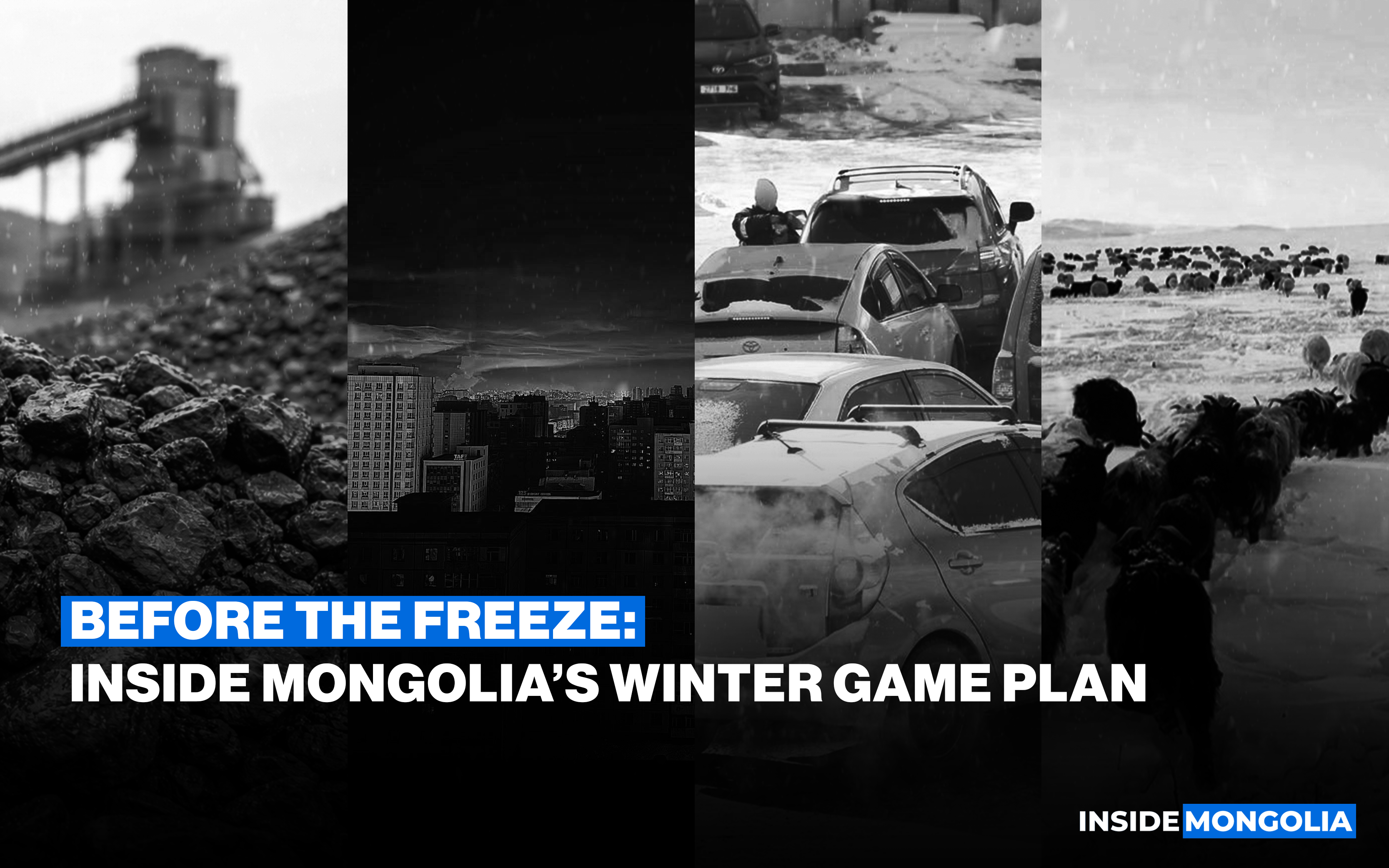
Winter is coming. As Mongolia prepares for another harsh season, the government has introduced its 2026–2027 winter readiness plan, focusing on the country’s biggest vulnerabilities: heating and power supply, aging infrastructure, fuel security, and rural livelihoods.
🌃 Ulaanbaatar: Managing an Aging Urban System
For Ulaanbaatar, winter preparation remains largely a battle against aging infrastructure. The capital is implementing 573 winter preparation projects, with progress reaching 57%, covering heating pipeline upgrades, power system maintenance, utility repairs, and drainage improvements.
- 👉 However, many of these measures are not new. Every year, the city enters winter with similar repair programs as it tries to keep aging systems running. Around 60% of underground utility networks have already exceeded their intended lifespan, meaning much of the current effort is focused on preventing failures rather than creating a fundamentally stronger system.
The biggest test will come when temperatures drop and heating demand reaches its peak. While these projects may reduce immediate risks, Ulaanbaatar still faces deeper challenges: outdated energy infrastructure, rising demand, and persistent winter air pollution.
⚡ Energy and Fuel: The Bigger Winter Challenge
The pressure on the capital reflects a broader national issue: Mongolia’s energy system is struggling to keep pace with demand. Electricity demand in the Central Region Integrated Power Grid is expected to reach 1,956 MW this winter, around 150 MW higher than last year. The government has allocated ₮350 billion for winter preparedness projects, including upgrades at major thermal power plants.
- ➕ There are, however, signs of improvement. After years of delays, new generation capacity is finally coming online. The 300 MW Buuruljuut Power Plant has begun supplying electricity, while the upcoming 70 MW Selenge plant and 660 MW Bayangiin Power Plant are expected to further expand domestic capacity in the coming years.
🐏 Rural Resilience: Protecting Against Another Dzud Risk
Winter challenges are not limited to cities. Across Mongolia, provinces are preparing for another season where extreme weather can threaten both livestock and rural livelihoods. Authorities are strengthening hay and fodder reserves, food supplies, and essential rural services to reduce the impact of potential dzud events. For a country where millions of livestock depend on seasonal conditions, early preparation is critical, because a difficult winter can quickly become an economic and social crisis for herding communities.
Finally… Mongolia’s winter challenge is not simply about surviving freezing temperatures. It is a test of whether the country can maintain reliable energy, protect vulnerable communities, and strengthen systems that have faced pressure for decades. The coming months will show whether this year’s preparations are enough, not only to prevent disruption, but also to build resilience for future winters.
Comment